| 1 |
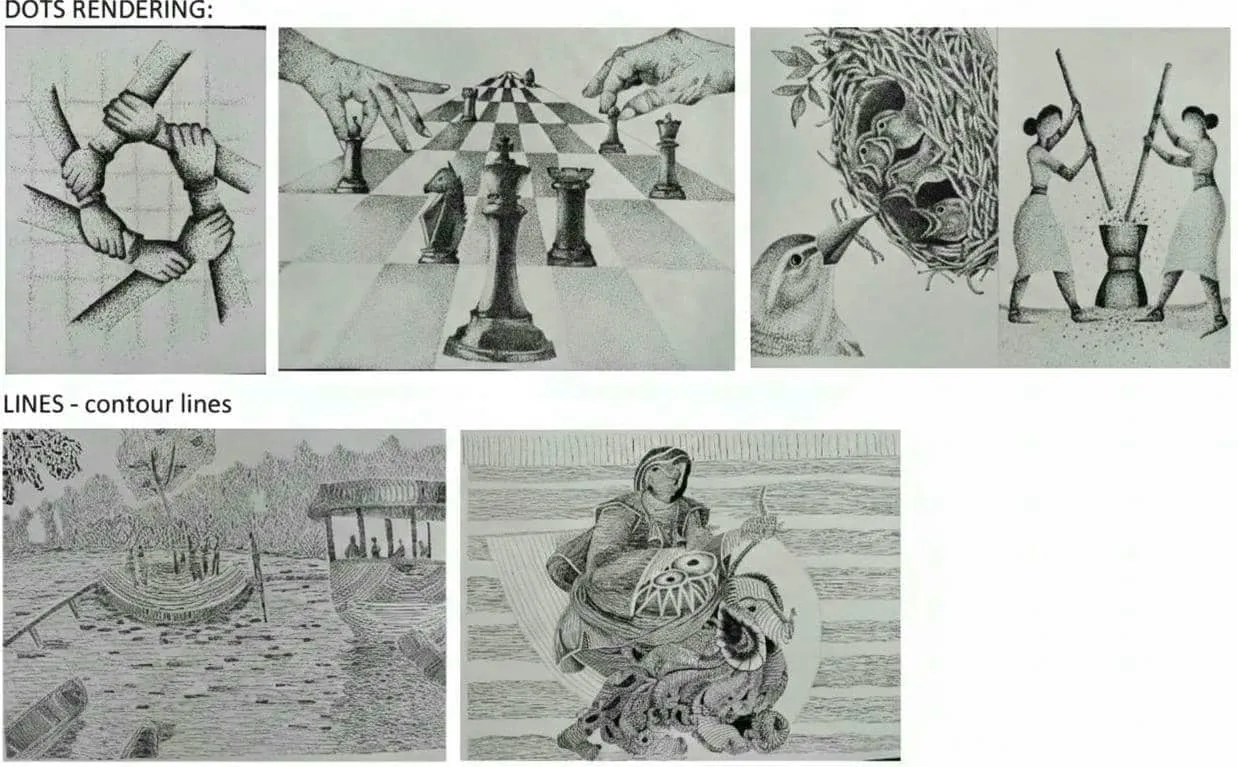
DOTS RENDERING
|
The dot marks the beginning and the end of a line. By this art students learned to create gradients, textures and patterns with dot.
|
| 2 |
LINES
|
Contour is a visual term describing how lines, shapes and forms define a visual object or figure edges. It helps to create the illusion of three-dimensional form and guides a viewer’s eye around a piece.
|
| 3 |
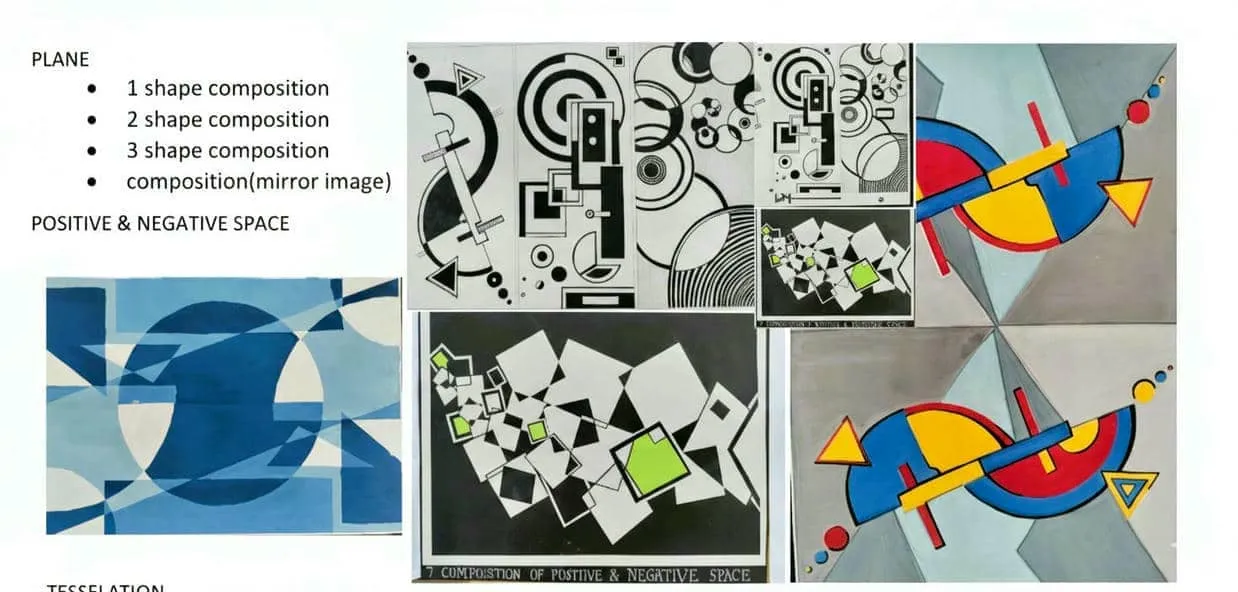
PLANE
- 1 shape composition
- 2 shape composition
- 3 shape composition
- Composition (mirror image)
|
Composition is putting together or organization of the elements of art according to the principles of art. Making the mirror image of our shape composition and using color theory to gain knowledge about color combination.
|
| 4 |
POSITIVE & NEGATIVE SPACE
|
Using of one shape composition, differentiating positive and negative spaces (Utilitarian spaces).
|
| 5 |
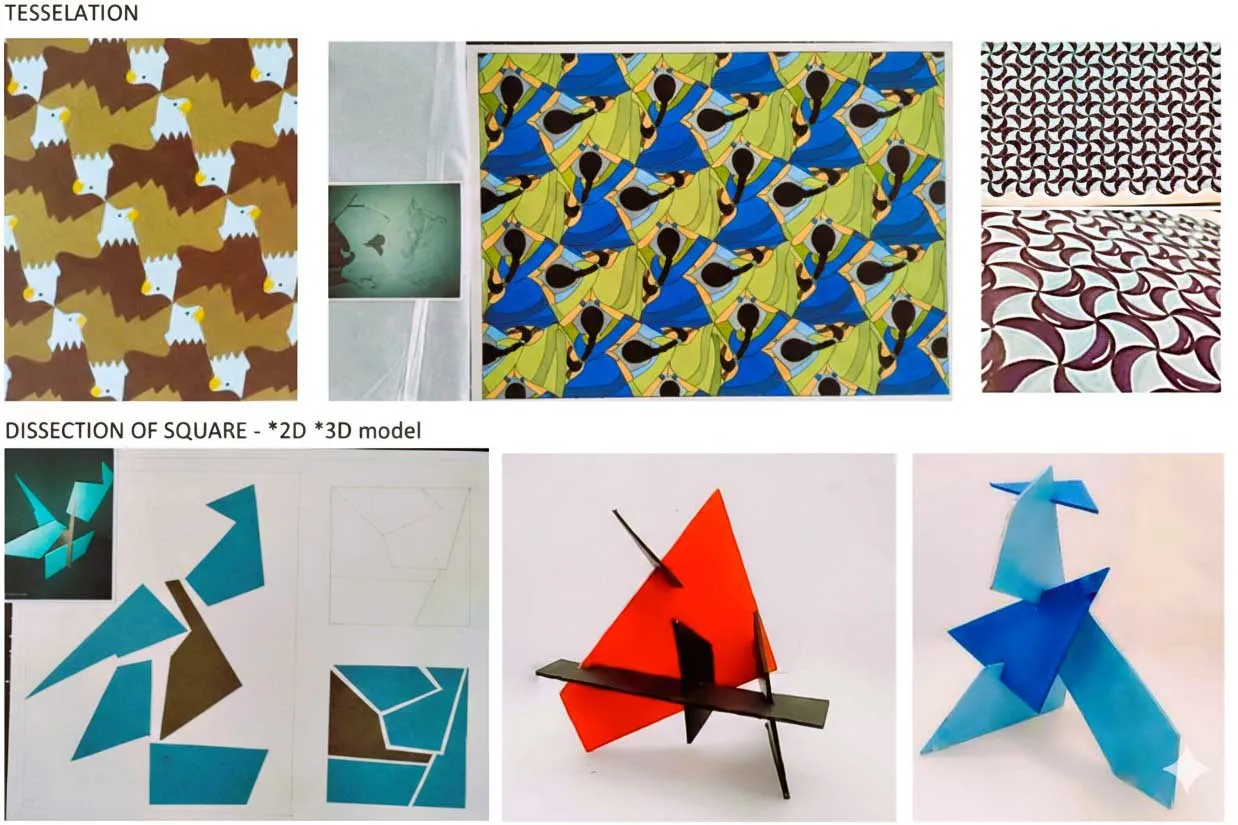
TESSELLATION
|
Understanding of the qualities of different elements as well as their composite fusions.
|
| 6 |
DISSECTION OF SQUARE
|
Dissection of 2-dimensional square and converting it into interesting 3-dimensional composition.
|
| 7 |
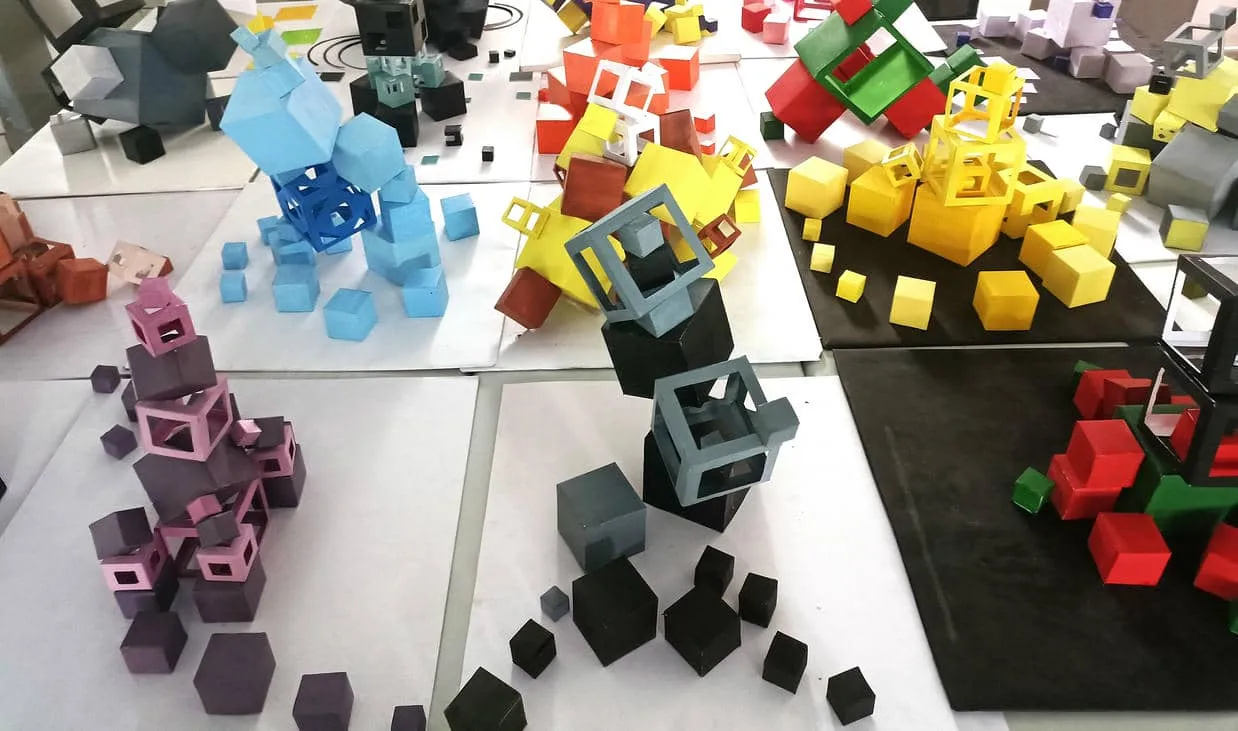
FORM
|
Cubes are common shapes used in architecture. Composition of cubes following basic principles helps us to understand the principles of architectures. To engage and combine the elements of design in spontaneous as well as intentional ways in order to create desired qualities and effects.
|
| 8 |
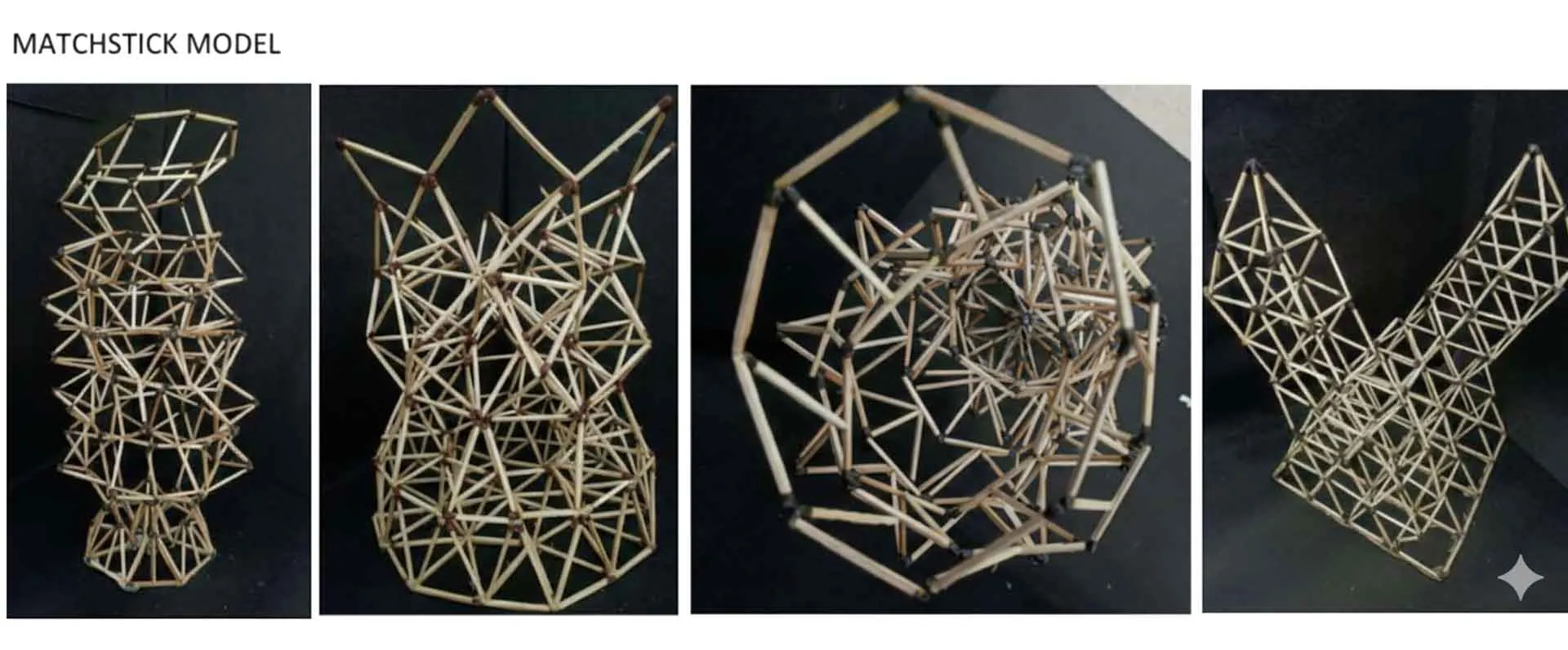
MATCHSTICK MODEL
|
Creating stable structures without intersection or cutting of matchsticks. To create basic structure and its stability.
|
| 9 |
ABSTRACT 2D LAYERS TO 3D FORM
|
Focusing on basic elements from any scenery and converting it to 3-dimensional abstract with different top and front view, which gives experience of building.
|
| 10 |
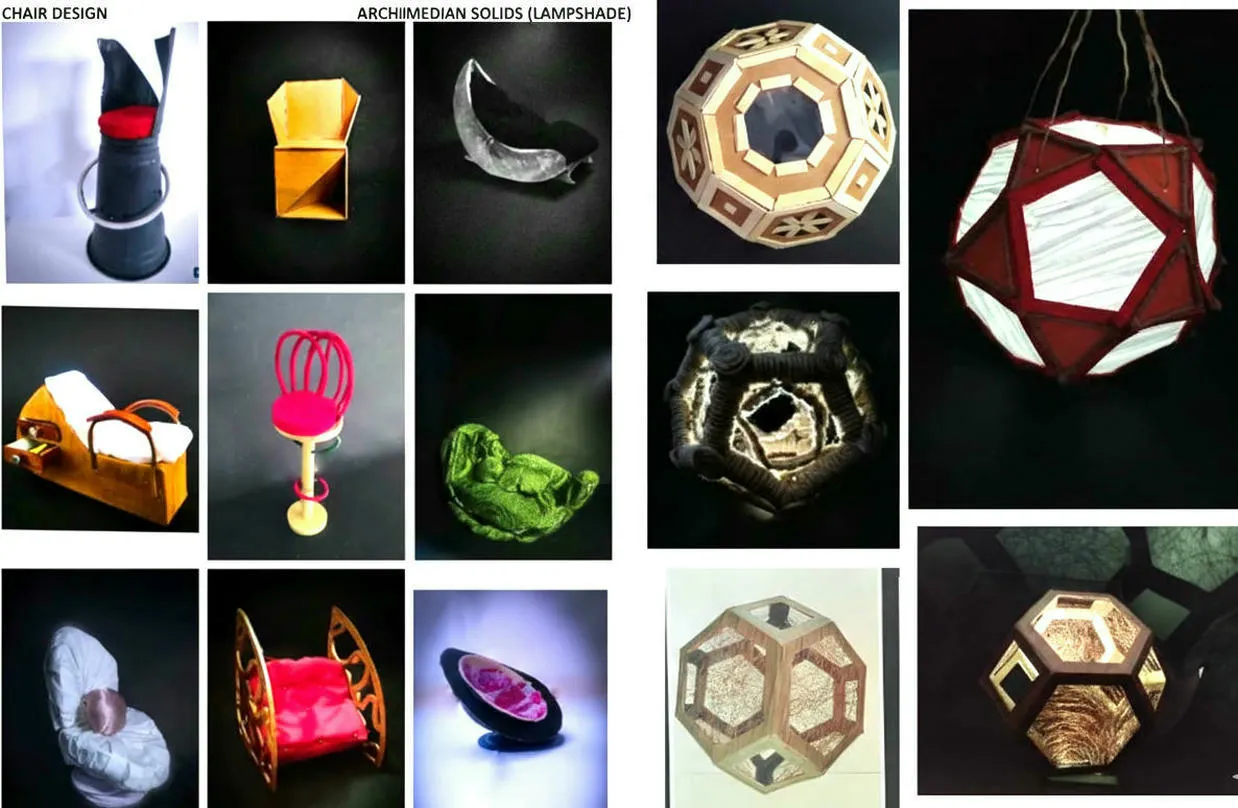
CHAIR DESIGN
|
Creation of chair design, inspired from objects or natural materials, to understand the materials and to create a unique chair design for different purposes, to design and study evolution of craft through iconic designs like Eames Chair, Rietveld Chair.
|
| 11 |
ARCHIMEDIAN SOLIDS (LAMPSHADE)
|
Creating lampshades using Archimedian solids helps us to understand the solids and exploring new materials to achieve different kinds of creative lampshades.
|
| 12 |
9 SQUARE MATRIX
|
Stages and evolution of floors, walls and roof plan helps us to learn creative levels of building. An analytical appraisal of building form in terms of visual character, form and function, play of light and shade.
|